History
The lake they made on purpose.
A river, its floods, an old amusement park — and the dam that put it all beneath 27,000 acres of blue water.
Quick snapshot
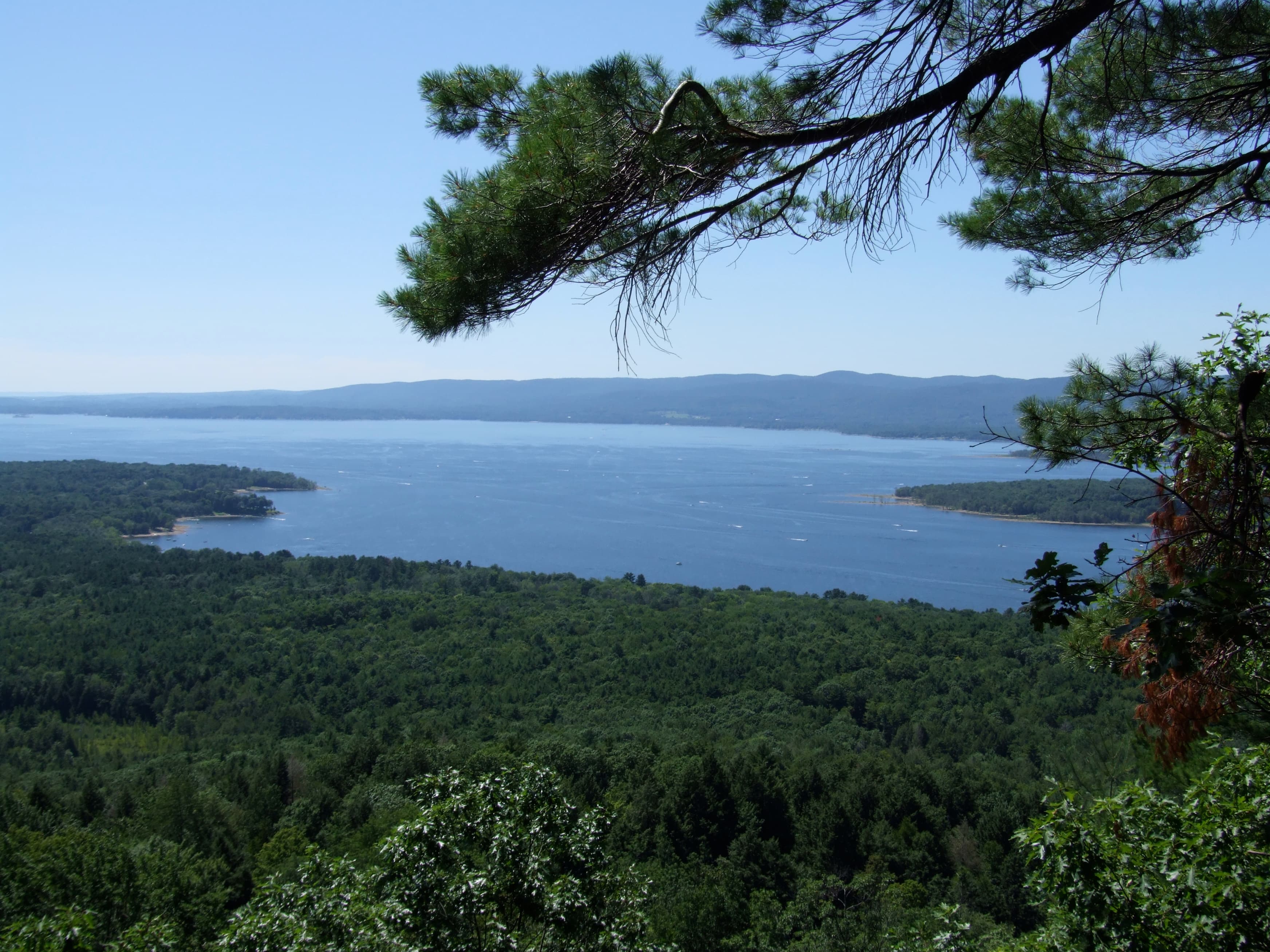
The Great Sacandaga is New York's largest reservoir — a man-made lake born in 1930 when the Conklingville Dam closed its gates and flooded the Sacandaga Valley. It spans Fulton, Saratoga and a corner of Hamilton counties, and its lasting job is flood control for the Hudson River.
1930
Gates of Conklingville Dam closed March 27
29 mi
Long — up to 5 miles wide
~42 sq mi
~27,000 acres of water at full pool
~31 ft
Water level swings through the year
A century in six chapters.
Before 1930
The river and the 'Coney Island of the North'
The Sacandaga ('Land of the Waving Grass' in Mohawk) was a river through marshy flats — 'the Vlaie' — threading farming and milling hamlets. Each spring it flooded; each summer it dried up. Its fame was Sacandaga Park, a resort served by the Fonda, Johnstown & Gloversville Railroad that drew over 90,000 summer visitors to hotels, a midway, a ballpark on Sport Island — and stars like Al Jolson, W.C. Fields and John Philip Sousa.
1913
The flood that changed everything
In late March 1913, catastrophic flooding hit the Hudson Valley — Albany's river rose ~22 feet, streets sat under 5+ feet of water for days, and ~180 cases of typhoid followed. It was the second-deadliest flood in U.S. history, and it finally moved New York to tame the Sacandaga. Laws passed in 1913–22 let the state flood a sliver of Adirondack forest for reservoir storage and created the Hudson River Regulating District.
1927–1930
Building the Conklingville Dam
An earth-fill dam 95 feet high closed the glacial divide at Conklingville. The $12 million bill came with no tax dollars — about 95% was paid by Hudson River power users who gained a guaranteed water supply. First bids were let in 1927; a 1929 flood delayed the finish.
March 27, 1930
The lake rises
The gates closed and the valley filled within weeks — nearly 38 billion cubic feet of water. The reservoir became the largest in New York State, compared at the time to the size of Lake George. It was later rechristened 'Great Sacandaga Lake' in the 1960s to market it to tourists.
The taking line
What the water covered
Ten communities were wholly or partly flooded — Batchellerville, Fish House, The Vly, Cranberry Creek, Sacandaga Park, and more. Roughly 12,000 homes were moved or destroyed, ~1,100 families displaced, and about 3,872 graves were relocated from two dozen cemeteries. Four covered bridges and a railroad bridge came down; ten new bridges and ~50 miles of road built the lake's new perimeter. What remained was burned as the water climbed.
Today
A reservoir that defines the region
Operated by the Hudson River–Black River Regulating District with no tax dollars — funded by hydro leases and permits — the lake still does its century-old job: it cut flood crests dramatically during the Halloween 2019 storm, holding the Hudson below major flood stage from Hadley to Fort Edward. Along the way it grew into the Adirondack foothills' beloved playground.
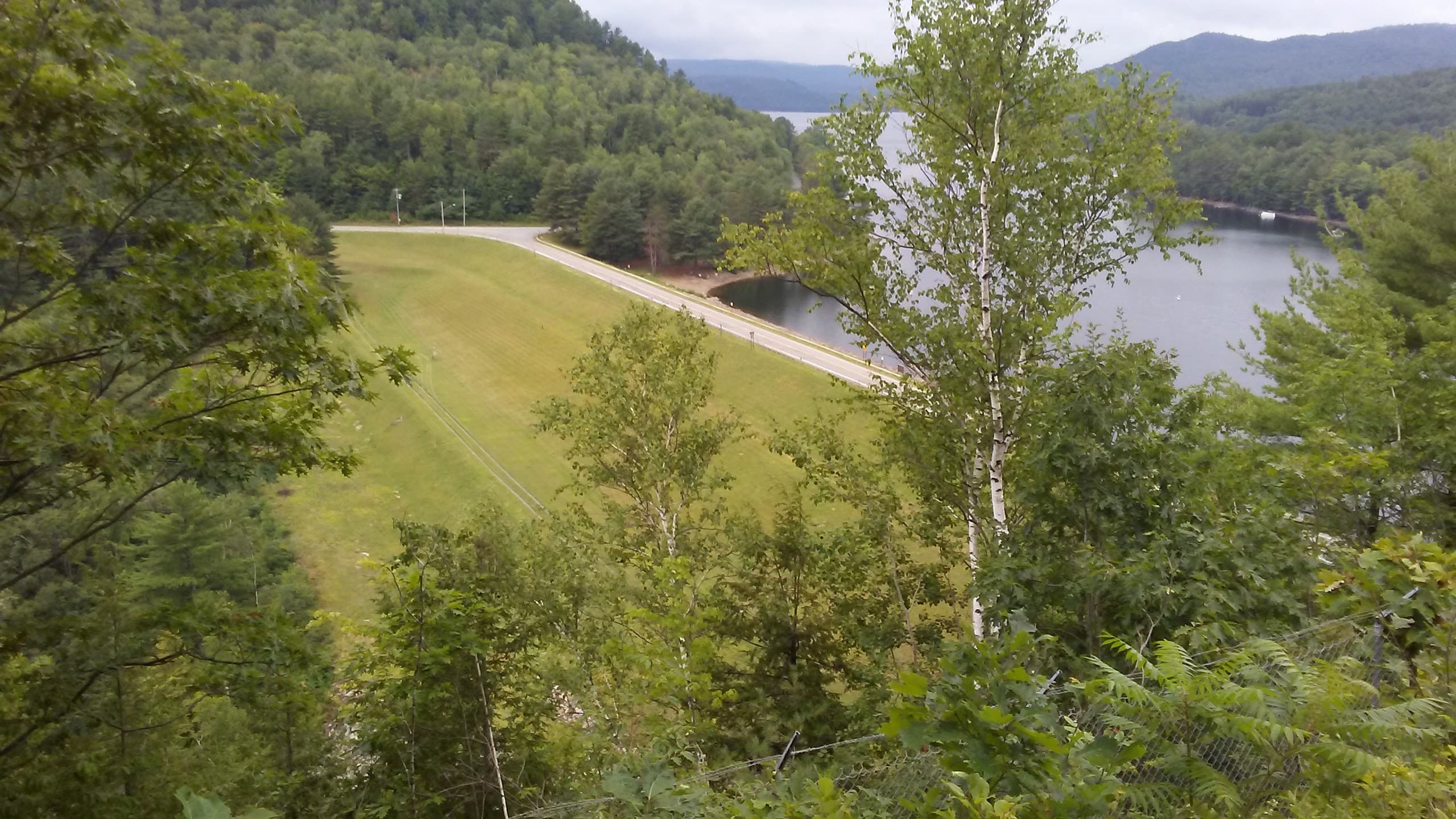
See it still doing its job.
Drive to the northeast end of the lake to stand at the Conklingville Dam (Hadley's western edge, where the Sacandaga meets the Hudson). Its E.J. West plant hums out ~22 megawatts, and the winter eagle-watching at open water near the dam is a spectacle in itself.
Did you know
Fascinating facts.
Record pike
The North American record northern pike — 46 lb 2 oz — was caught here on September 15, 1940.
Hydropower
The E.J. West plant at the dam generates about 22 megawatts.
Largest in NYS
New York's biggest reservoir — marketed as a 'lake.'
$12M, zero taxes
~95% funded by Hudson power users, 5% by protected communities.
3,872 graves moved
Relocated from ~22–24 cemeteries as the valley flooded.
Stars of the park
Al Jolson, W.C. Fields, Eddie Cantor, John Philip Sousa.
Glacial twin
The lake recreates prehistoric Glacial Lake Sacandaga, which drained through the same divide.
X-Files spot
Northville & 'a UFO in Great Sacandaga' starred in 'Tempus Fugit' and 'Max' (1997).
The town that watches it all.
When the dam closed in 1930, Northville — once a lumber boomtown on high ground — became a peninsula on an arm of the new lake, its valley side turned to water. Today it's where the Northville–Lake Placid Trail begins, and its historic village is on the National Register. The lake's story is told in the 2017 documentary Harnessing Nature: Building the Great Sacandaga.
Meet the towns around the lake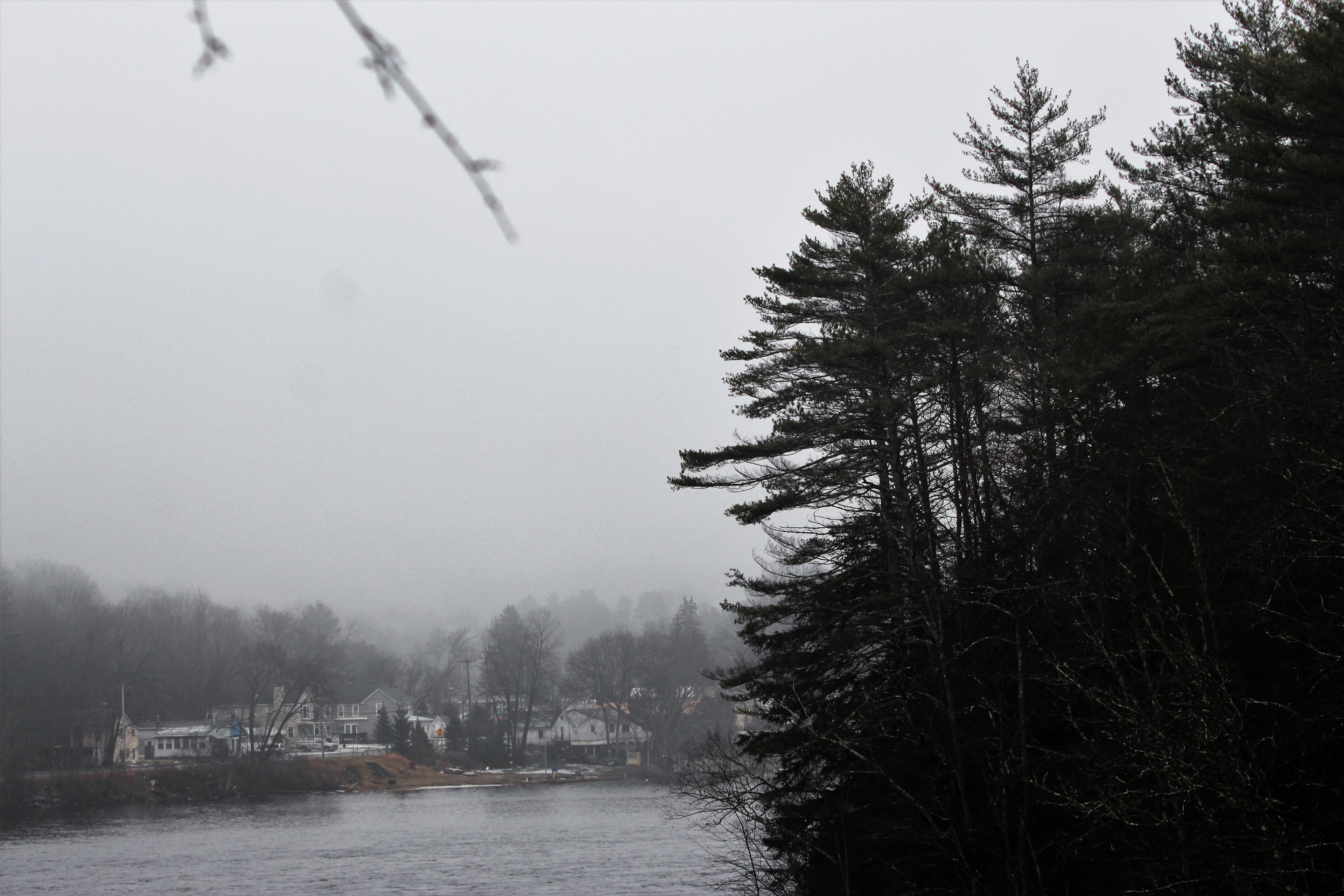
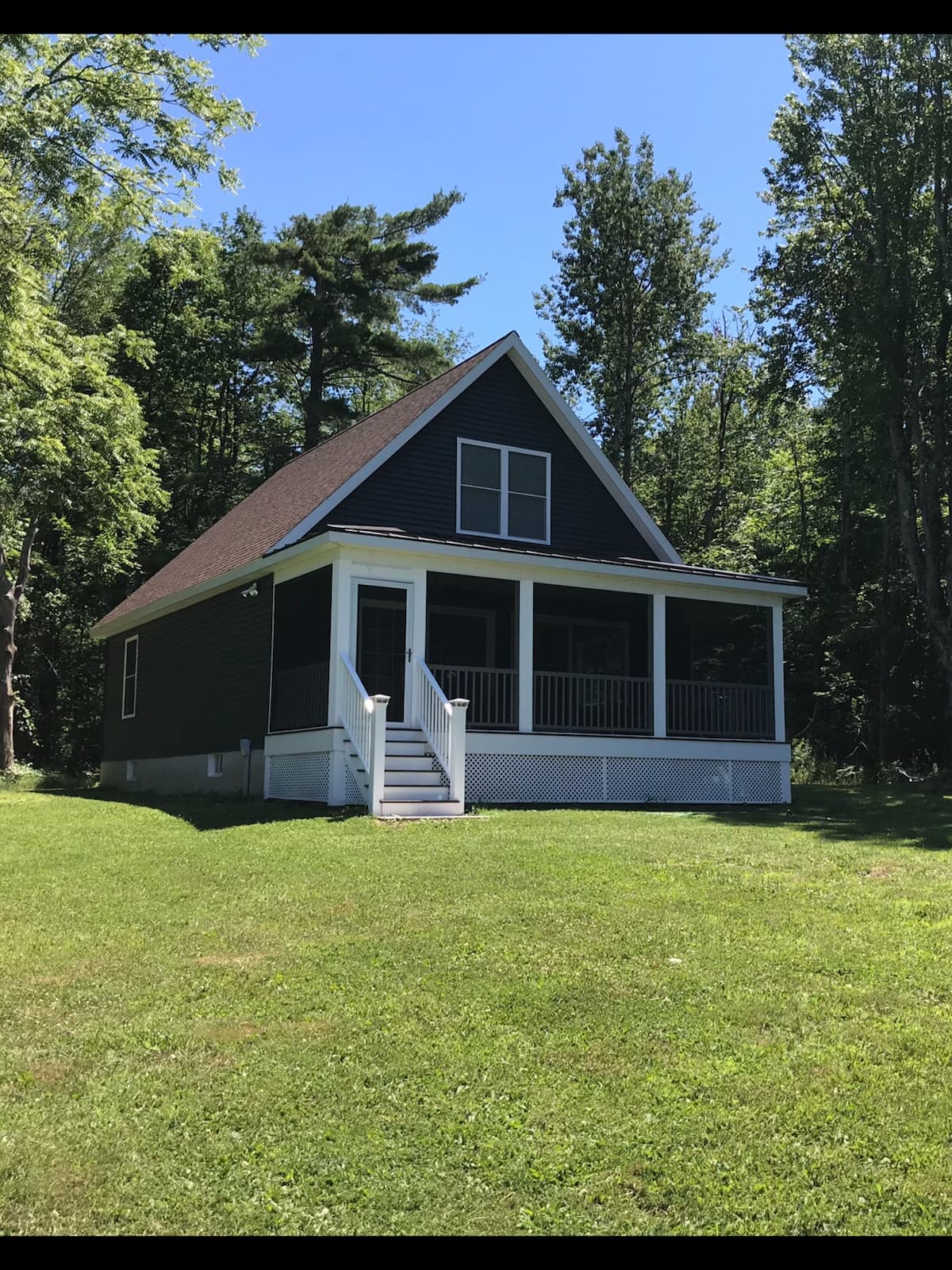
5.0 · 14 reviews · Guest Favorite
Make it a stay. Spend the night on the lake.
A newly built lakefront guesthouse with a screened porch, fire pit, kayaks, paddleboards and a 100' dock — steps from the water in North Broadalbin, 20 minutes from Saratoga. Sleeps 7.